Table of Contents
ToggleIf you’re considering a tiny home community development or wondering whether your land could support multiple compact dwellings, the math isn’t as straightforward as dividing square footage. An acre offers 43,560 square feet of raw land, but zoning restrictions, infrastructure needs, and setback requirements dramatically cut into what’s actually buildable. This guide walks through the real-world constraints and practical calculations that determine how many tiny homes can actually fit on an acre, and what it takes to get approval.
Key Takeaways
- An acre contains 43,560 square feet of land, but zoning restrictions, infrastructure, and setback requirements reduce actual buildable space to roughly 28,000–35,000 square feet.
- Tiny homes typically fit 4–6 units per acre for 400-square-foot homes and 3–5 units per acre for larger 600-square-foot homes, depending on layout and local codes.
- Zoning laws are the critical gatekeeper—most single-family zones allow only one home per lot, requiring multi-family zoning or special permits for tiny home communities.
- Roads, parking, utilities, stormwater management, and green space consume 20–40% of an acre, making infrastructure planning as important as home footprint size.
- Real-world developments average 4–6 homes per acre, balancing code compliance, marketability, and economic viability rather than pursuing theoretical maximum density.
- Setback requirements, fire safety buffers, and terrain challenges can reduce how many tiny homes fit on an acre, so site-specific planning and local ordinance review are essential.
Understanding Acre Dimensions and Tiny Home Basics
An acre measures 208.7 feet on each side (in a perfect square), giving you 43,560 square feet total. But don’t get excited yet, that raw acreage isn’t all buildable.
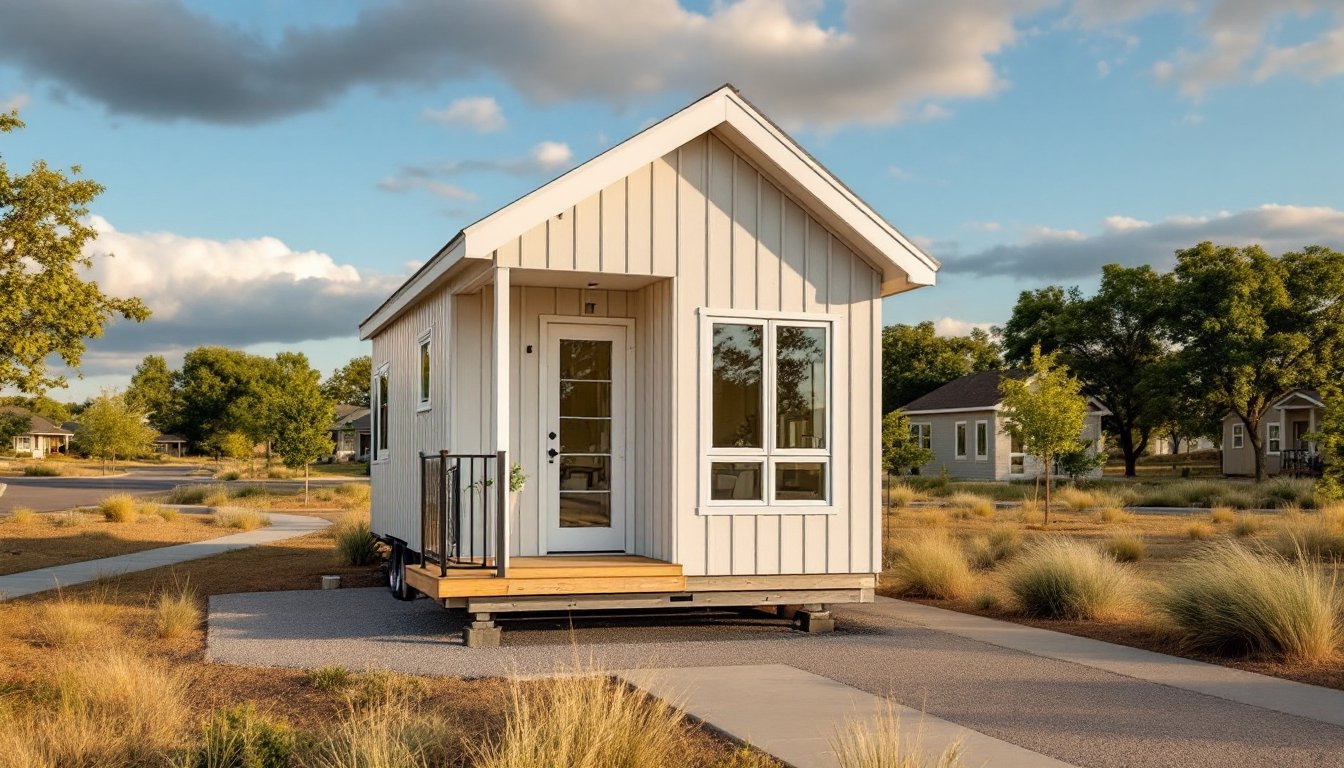
Tiny homes typically fall into two categories: structures under 400 square feet and those between 400–600 square feet. The smaller units are often on wheels (RVs or mobile tiny homes), while fixed structures usually start around 300 square feet for minimal living and go up to 800 square feet for more comfort. A 400 square foot tiny home footprint occupies roughly 20 × 20 feet of land: a 600 square foot home might sit on a 25 × 24 foot lot.
Before calculating density, understand that footprint size is only the beginning. You’ll need space for roads, parking, utilities, drainage, landscaping buffers, and setbacks from property lines. These aren’t optional add-ons, they’re required by code in most jurisdictions.
Zoning Laws and Regulations That Limit Density
Zoning is the real gatekeeper. Most single-family residential zones allow only one dwelling per lot, with minimum lot sizes ranging from 6,000 to 15,000+ square feet depending on local requirements. This single-use rule effectively blocks tiny home communities in traditional neighborhoods.
Tiny home villages typically require multi-family zoning (often MF or MU for mixed-use) or special approval through a variance or conditional use permit. Some progressive jurisdictions have created accessory dwelling unit (ADU) regulations that allow one small unit per residential lot, but that’s different from clustering multiple tiny homes on shared land.
Building codes also set minimum lot widths (often 50–80 feet) and setback requirements (distances from property lines, typically 15–30 feet on sides and 25–50 feet on street-facing sides). The International Residential Code (IRC) governs most residential construction, but many states and counties add stricter rules. Check your local jurisdiction’s zoning ordinance, it’s the document that will eventually determine feasibility. Approval requires planning board review, public hearings, and sometimes environmental impact assessments.
Calculating Maximum Capacity by Home Size
400 Square Foot Homes
A 400 square foot home on a standard foundation (20 × 20 feet) needs a minimum lot of about 3,600–5,000 square feet when you factor in setbacks and parking. If you’re squeezing multiple units onto one acre with shared infrastructure (common in planned communities), density can theoretically reach 8–10 homes per acre. But, reality is tighter.
Assuming 35% of the acre goes to roads, parking, and common areas, you have roughly 28,000 buildable square feet left. Divide that by 5,000 square feet per unit, and you get roughly 5–6 units per acre. Add utilities (water lines, sewer, electrical runs, fire access) and landscaping, and you’re likely looking at 4–6 homes per acre in a well-designed layout.
600 Square Foot Homes
Larger units need bigger footprints. A 600 square foot home (25 × 24 feet) with its own utilities and setbacks demands about 6,000–7,500 square feet per unit. On an acre, this translates to roughly 3–5 homes per acre after accounting for infrastructure.
The gap between the two isn’t dramatic, but it matters. Every foot of width and length adds to lot size and reduces overall density. For comparison, conventional subdivision lots often yield only 2–3 homes per acre because of larger minimum requirements. Tiny homes strategies that emphasize shared amenities and efficient street layouts can push density higher, but you’re still bound by code.
Infrastructure and Practical Spacing Requirements
Infrastructure consumes more of your acre than most people expect. Stormwater management (ponds, bioswales, or retention areas) can take 10–15% of the site, especially in areas with poor drainage or strict environmental regulations. Road networks for emergency access, parking, and circulation typically claim another 20–30%, depending on whether you use one central drive or distributed streets.
Utilities (water, sewer, gas, electric, fiber) run either underground or overhead, both take space. A shared utility corridor running through the development uses 2–4 feet of width. If septic systems are required instead of municipal sewer, each unit might need a drainfield occupying 1,500–2,500 square feet, cutting density significantly.
Setbacks and buffers between units exist for fire safety, privacy, and code compliance. The IRC requires a minimum of 3 feet between structures (sidewall to sidewall), but many jurisdictions demand 10–15 feet for emergency access and to prevent fire spread. On shared property, you’ll also want green space for community use and visual relief, this isn’t wasted land: it’s often a selling point and a code requirement.
Don’t overlook grading and slope. Steep terrain increases infrastructure costs and reduces usable space. A site with significant slope might only support 2–3 homes per acre even if zoning permits higher density. Get a cost guide from Angi to understand site development expenses if you’re seriously considering a build.
Real-World Examples and Development Models
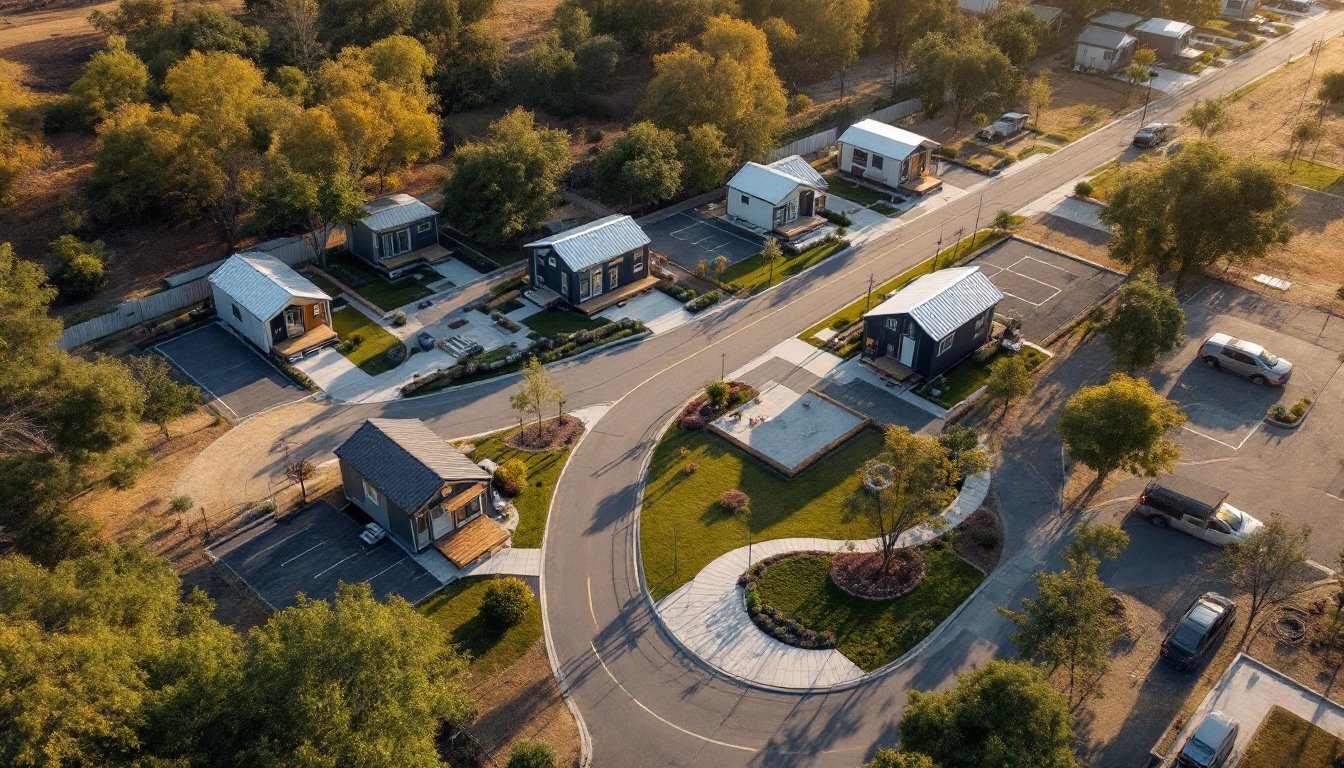
Real developments rarely hit theoretical maximums. East Lake Village in Seattle, a well-known tiny home community, fits about 3–4 homes per acre on mixed-zoning land. Cottages at Lake David in North Carolina, an established cluster, averages 4 homes per acre with shared parking and a community center. Both prioritize walkability and common space over raw density.
Developments using single-loaded streets (homes on one side only, with open space or green buffer on the other) typically land at 3–5 units per acre. Double-loaded layouts (homes on both sides of a street) can push toward 6–8 units per acre, but narrow the feel and complicate parking.
Pocket neighborhoods, a European-inspired model gaining traction in the U.S., often cluster 8–15 small homes around a shared courtyard on a quarter to half-acre parcel. This model works because it limits scale and leverages the community aspect. Scaling it to a full acre means roughly 6–8 pocket clusters, though regulations vary widely by region.
How to build a tiny home can inform the design phase, but financing and permitting are the real hurdles. Most developers find that 5–6 homes per acre is the practical sweet spot, dense enough for economics, loose enough for code compliance and marketability. Anything beyond that risks zoning denial or a lengthy appeal process.
For land parcels in high-demand markets, apartment therapy inspiration and tiny homes examples showcase how tight spaces are actually lived in, which can justify higher-density applications to planning boards.