Table of Contents
ToggleA small patio doesn’t have to feel cramped or overlooked. The walls surrounding your outdoor space are prime real estate for personality and function, they’re the backdrop to everything you do out there, yet most homeowners treat them as afterthoughts. Whether you’re working with an existing concrete wall, a dated fence, or blank vinyl siding, small patio wall ideas can turn that dead space into a showstopper. The right treatment can expand the visual feel of your patio, add privacy, improve usability, and boost your home’s curb appeal. You don’t need a major renovation either: many of these ideas work with a weekend or two of work and a modest budget. Let’s walk through seven practical ways to reimagine those walls and make your patio feel intentional and inviting.
Key Takeaways
- Small patio wall ideas can transform blank, overlooked surfaces into functional focal points that expand visual appeal and privacy without requiring major renovation.
- Vertical gardens and living wall systems maximize limited square footage by growing upward, offering affordable options like pocket planters ($15–$50) that are easy to install with basic tools.
- Fresh exterior paint in bold colors like terracotta or navy is the fastest and cheapest patio wall refresh, but quality outdoor paint ($40–$80 per gallon) and proper prep work with primer are essential for durability.
- Textured finishes such as faux stucco, pebble dash, or shiplap add visual depth and character without relying on complex patterns, creating dynamic shadow lines throughout the day.
- Strategic lighting—from solar string lights to wall-mounted sconces and uplighting—transforms patio walls into evening focal points while adding functionality and ambiance at a fraction of the cost.
- Combining multiple small patio wall ideas, such as painted accents with planters and string lights, creates a curated, intentional outdoor space that feels like a real room.
Vertical Gardens and Living Walls
A vertical garden transforms a patio wall from a blank surface into a thriving landscape. Living walls work especially well in small spaces because they grow upward instead of outward, making them ideal when square footage is limited. You can go simple, a few wall-mounted planters in a staggered pattern, or ambitious with a modular living wall system that holds soil and plants in a series of pockets.
Start by choosing wall-mounted options that suit your space. Pocket planters made from recycled plastic or fabric are lightweight, affordable ($15–$50 per unit), and easy to install with basic fasteners into studs or masonry anchors. Alternatively, tiered shelving can hold individual pots and create depth without the complexity of a full living wall system.
Plant selection is crucial. Shade-tolerant plants like ferns, pothos, and shade sedums work if your patio wall gets limited sun. For sunny exposures, try creeping succulents, trailing sedum, or lightweight climbing vines. Make sure your mounting hardware can support the weight, soil is heavy, especially when wet. Most DIYers can install wall planters with a drill and lag bolts into studs, or use concrete anchors rated for the load into masonry.
Water drainage is essential. If plants are directly above walkways or seating, include a drip line or accept that water will run down. Alternatively, mount planters on the wall’s lower half where runoff won’t trouble anyone. Hunker offers practical guidance on creating vertical gardens if you want detailed planting and care strategies.
Paint and Mural Designs
Bold Colors and Accent Walls
A fresh coat of paint is the fastest, cheapest way to revive a patio wall. Outdoor paint isn’t optional here, use a quality exterior acrylic latex paint (not interior paint) rated for your climate zone. This stuff costs a bit more ($40–$80 per gallon) but it flexes with temperature swings and resists mildew far better than interior grades.
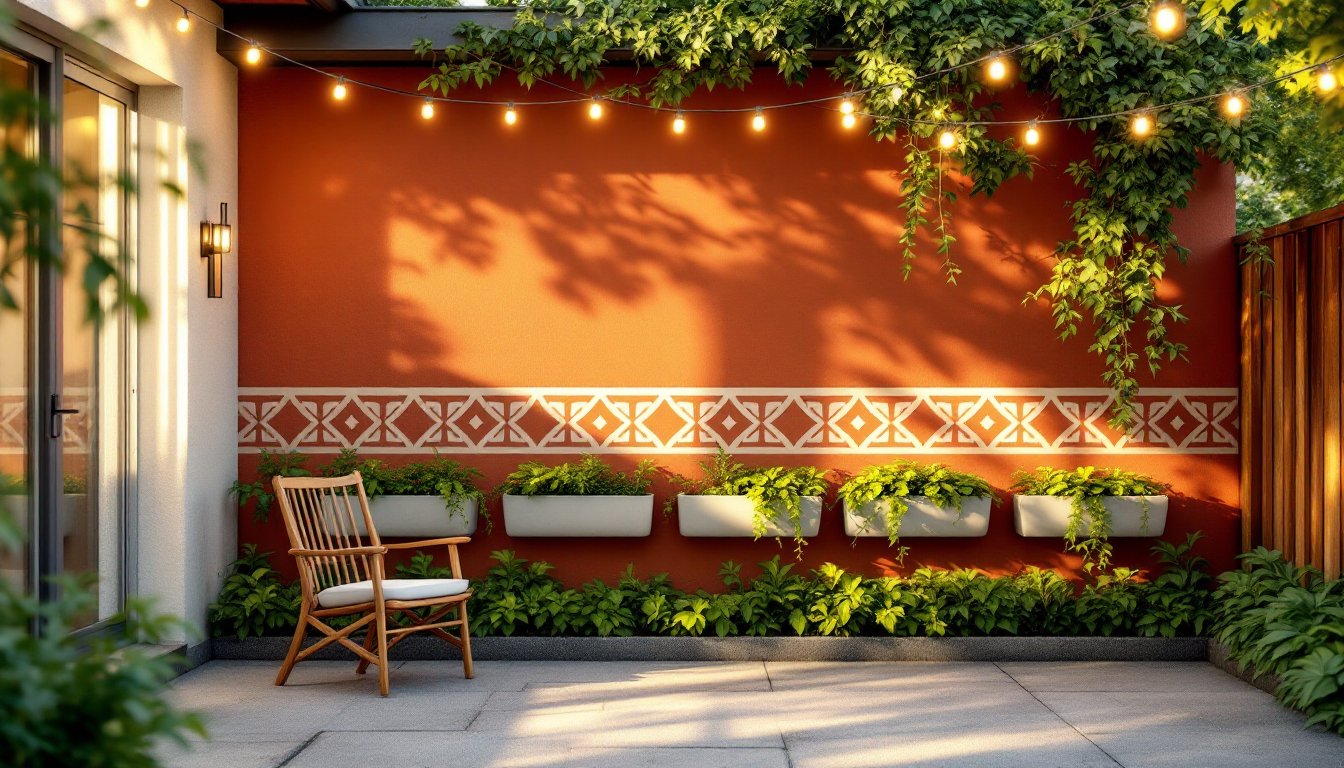
Bold colors work beautifully in outdoor spaces because natural light is harsh and forgiving. Terracotta, deep sage, navy, or charcoal can anchor a patio without feeling overdone. If you’re nervous about commitment, start with one accent wall and leave adjacent walls neutral. This creates visual depth without boxing in the space.
Prep work makes or breaks the job. Pressure wash the wall, let it dry completely, fill any cracks or holes, and sand rough spots. Primer is not optional on porous surfaces like concrete or unpainted brick, it prevents paint from soaking in unevenly. One coat of primer plus two finish coats is standard. A 4-inch angled brush works best for corners and edges: a roller (3/4-inch nap for textured surfaces, 1/4-inch for smooth) covers the field quickly.
Artistic Murals and Stencils
If you’ve got a steady hand and some vision, a mural or stenciled pattern takes paint from functional to striking. Hand-painted murals require artistic skill, but large-scale stencil patterns are doable for anyone with patience. Geometric patterns, botanical motifs, or abstract designs work well on patio walls.
Stencils can be sourced online ($20–$80 for quality reusable versions) or spray-painted freehand. Tape your stencil firmly to the wall, use exterior spray paint or stencil brushes with acrylic paint, and apply thin, even coats. Two light coats beat one heavy coat every time, heavy application bleeds under the stencil edges.
For a hand-painted mural without hiring an artist, consider outline-style designs or color-blocking patterns that don’t require photorealism. Sketching in chalk first lets you adjust before committing to paint. Southern Living frequently showcases regional outdoor design trends that include wall murals and painted finishes worth exploring for inspiration.
Textured and Decorative Wall Finishes
Texture adds depth and interest without relying on bright color or complex patterns. Textured finishes like knockdown drywall compound, faux stucco, or pebble dash create shadow lines that shift throughout the day, keeping walls visually dynamic.
Faux stucco finishes are popular and achievable with a little practice. A joint compound or stucco finish mixed with exterior paint can be troweled onto walls in layers, then textured with a sponge, broom, or specialty tool. This creates a rustic Mediterranean or Tuscan vibe without the cost of real stucco installation. Products like outdoor texture coatings ($30–$60 per gallon) include stucco-style finishes designed to cure and flex outdoors.
Pebble dash or aggregate finishes involve coating a surface with adhesive, then rolling or throwing pebbles or decorative stones onto it. This is more labor-intensive but extremely durable and visually striking. If your small patio wall is solid concrete, you might explore a decorative concrete finish or overlay: these require more skill but yield dramatic results.
Stone veneer or thin brick offers authentic texture without the weight of full masonry. Lightweight veneer systems ($8–$15 per square foot, plus installation) adhere to existing surfaces and require no additional framing. DIYers can install these with proper adhesive and fasteners, though the learning curve is steeper than painting. Budget for extra material, cutting veneer to fit corners and edges wastes some pieces.
Another low-tech option: shiplap or vertical wood paneling. Pressure-treated or cedar planks create a cottage-style backdrop and work on any wall surface. Mount horizontal furring strips first to create air space and proper fastening points, then attach planks with corrosion-resistant screws or nails. This approach feels warm and is surprisingly forgiving of imperfect walls underneath.
Lighting Solutions for Patio Walls
Strategic lighting transforms walls from daytime backdrops into evening focal points. Unlike painting or planting, lighting doesn’t require permanent installation, solar or battery-powered options give you flexibility.
String lights or bistro lights draped horizontally across a wall create instant ambiance and are cheap ($15–$40 for solar versions). Drape them loosely or in a grid pattern. They read as playful rather than formal, perfect for casual patios.
Wall-mounted sconces provide functional light and style. Solar sconces avoid electrical work entirely, no permits, no conduit runs, just mounting brackets and fasteners. Hardwired sconces require running 14 or 12-gauge outdoor cable in conduit to a GFCI-protected outlet, following local electrical code (typically covered under the NEC). If you’re not comfortable with basic wiring, hire a licensed electrician. Improper outdoor electrical work is a fire hazard.
Uplighting (placing lights low and angled upward) emphasizes wall texture and creates drama. LED spotlights mounted at the wall’s base, aimed upward, highlight stone veneer, murals, or planted features beautifully. Silicone caulk seals around light fixtures to prevent water intrusion.
Accent lighting behind climbing vines or beneath floating shelves adds layers of light without harsh overhead glare. If you’ve installed small patio wall ideas with a green wall, backlighting highlights foliage and makes the space feel layered.
Color temperature matters outdoors. Warm white (2700K) feels inviting and intimate, while cool white (5000K) reads more clinical. For small patios, warm tones are more forgiving and create a cohesive evening environment.
Water resistance is non-negotiable. Ensure all fixtures are rated IP65 or higher for wet-location use, even in a covered patio. Check that seals are intact and caulking isn’t cracked. Gardenista’s hardscaping guide covers outdoor structure and lighting strategies worth reviewing if you’re also considering pony walls or retaining borders.
Conclusion
Small patio walls are waiting for your attention, and the good news is you don’t need major construction or professional design to make them work harder. Whether you choose living walls for greenery, fresh paint and murals for color, textured finishes for depth, or strategic lighting for evening appeal, each approach transforms your outdoor space with manageable effort. Start with what excites you most, follow through on prep work, and don’t shy away from combining ideas, a painted accent wall with string lights and a few planters creates a curated, intentional feel. Your patio is a real room: treat its walls like the design anchor they should be.