Table of Contents
ToggleA shower-tub combo is the workhorse of most bathrooms, practical, space-saving, and essential. But just because it’s functional doesn’t mean it can’t look great. The right tile choice can transform a basic combo into a spa-like retreat or a sleek design focal point. Whether you’re planning a full renovation or a quick update, the tile you select sets the tone for your entire bathroom aesthetic. In 2026, the trend toward personalization means you’re not limited to one design direction: modern minimalist, timeless classic, and bold statement patterns all have a place. This guide walks you through shower tub combo tile ideas that work across budgets and skill levels, so you can create a space that’s both beautiful and built to last.
Key Takeaways
- The right shower tub combo tile choice transforms a functional space into a spa-like retreat while setting the tone for your entire bathroom aesthetic.
- Large format tiles (18×36 inches or larger) reduce grout lines, prevent mold growth, and create unbroken visual flow that makes small bathrooms feel larger.
- Subway and metro tiles remain timeless, versatile options that work across minimalist, traditional, and eclectic designs, with porcelain being worth the upcharge for water resistance.
- Mosaic and accent tiles work best as focal features—such as shower niches or border details—rather than all-over patterns, keeping the space intentional rather than visually overwhelming.
- Epoxy grout is a wise investment for mosaic work in wet areas, and proper ventilation (running exhaust fans 20–30 minutes after showers) prevents mold in high-grout-line areas.
- Neutral color palettes with matte finishes hide water marks and soap scum while ensuring your shower tub combo design won’t look dated in five years.
Modern Minimalist Tile Designs
Clean Lines and Neutral Palettes
Minimalism in bathroom tile design means letting materials and geometry do the talking. Think matte whites, soft grays, warm beiges, and the occasional accent in charcoal or deep navy. These palettes are forgiving, they hide water marks, soap scum, and dust better than glossy or heavily patterned alternatives, and they won’t look dated in five years.
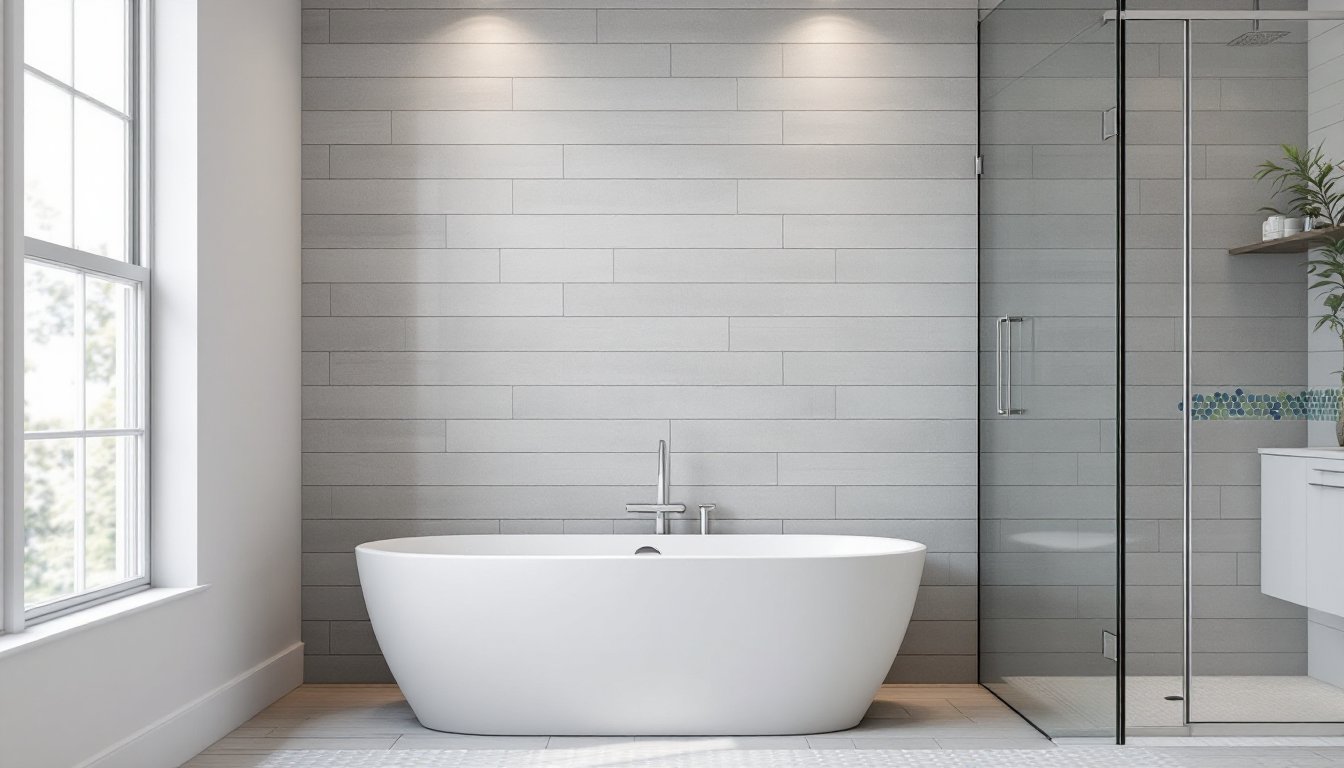
The foundation of a minimalist combo shower-tub setup is consistency. Use the same tile from the surround all the way to the floor to create visual continuity. A light gray porcelain tile (12×24 inches is popular and reads as clean geometry) covers the walls, while a matching floor tile with slight texture (for slip resistance) grounds the space. Grout color matters more than most people realize: a matching grout line (same tone as the tile) creates seamless, calm expanses: a contrasting grout (darker or lighter) adds subtle grid definition without noise.
Neutral doesn’t mean boring. Matte finishes feel more refined than glossy ones, and a subtle texture, like a linen or concrete-look porcelain, adds depth without pattern. Keep trim minimal: a thin pencil-line accent tile in brushed stainless steel or white at the top of the shower wall can define the space without overwhelming it. Avoid trim everywhere else: let the tiles themselves form the visual boundaries.
Large Format Tiles for Contemporary Spaces
Large format tiles (18×36 inches, 24×48 inches, or even larger) are the signature of contemporary design. They reduce grout lines, which means fewer places for mold and mildew to hide, a practical win. Fewer seams also create an unbroken visual flow, making a small bathroom feel larger.
For a combo shower-tub, consider large format porcelain in a soft white or pale gray. Porcelain is durable, water-resistant, and available in finishes that mimic natural stone without the maintenance headaches of actual marble or limestone. A 24×48 inch plank-style tile laid in a linear, staggered pattern (like brickwork) adds subtle movement while staying restrained. This layout is simple to execute during installation and forgiving of any minor surface variations in your walls.
One practical note: large format tiles are heavier and demand a perfectly flat substrate. Any dips or bumps in your wall will show up as lippage (uneven grout lines). If you’re tiling over existing surfaces, you may need to use a skim coat or self-leveling underlayment first. This isn’t a shortcut step, it’s essential for a professional result that won’t trap water or create visual headaches.
Pair large format tiles with matching grout and minimal trim for the cleanest look. A frameless glass shower enclosure (if you have a combo tub-shower) reinforces the minimalist vibe and keeps sightlines open. This approach works especially well in apartments or smaller bathrooms where visual simplicity expands the perceived space.
Classic Subway and Metro Tile Styles
Timeless Appeal and Versatile Applications
Subway tile, those classic 3×6 inch rectangular tiles, have earned their place as the most versatile option in bathroom design. They work in minimalist spaces, traditional homes, and eclectic interiors. The reason is simple: subway tile is all about proportion and proportion never goes out of style. A 3×6 tile perfectly balances visual weight without feeling cramped, and the modest size means installation is straightforward (less cutting, fewer complex layout puzzles).
For a shower-tub combo, run subway tiles from the tub edge to the ceiling (typically 60–72 inches high). A standard installation uses a running bond layout, offset rows that distribute visual weight evenly and feel organic, like real brickwork. White subway tile with contrasting grout (dark gray or charcoal) is the iconic look, though cream or soft gray tiles with matching grout feels warmer and less clinical.
Where subway tile shines is its adaptability to mixed materials. Pair subway on the walls with a completely different tile on the floor, say, hexagonal mosaic or a larger format floor tile in a contrasting tone. This breaks up the space visually and gives you room to add personality without feeling chaotic. A band of small mosaic tiles or a contrasting accent row (often a small square or subway variant in a different color) installed horizontally at eye level adds a detail point without overwhelming the design.
Metro tile is a close cousin, slightly larger (4×8 inches) with beveled edges that catch light and create subtle shadow lines. Metro reads as slightly more modern than traditional subway, though both are equally timeless. The beveled edge is a small detail that catches light and adds dimension, making the wall feel more textured and less flat.
Both subway and metro tiles are readily available at every price point, from budget-friendly ceramic options to premium porcelain or even glass versions. For a combo shower-tub that gets frequent use, porcelain subway or metro tile is worth the small upcharge: it’s harder, more water-resistant, and resists staining far better than ceramic. Glazed finishes are standard for walls (they shed water easily), while matte finishes on floors provide better slip resistance. Budget-friendly ceramic subway works fine for walls but isn’t ideal for shower floors, where the softer material can eventually chip or trap moisture. Research shows that home decorating inspiration and HGTV renovation guides consistently feature subway and metro tile in bathrooms that stand the test of design trends, proof of their enduring appeal.
Mosaic and Accent Tile Features
Creating Visual Interest With Pattern Play
Mosaic tiles, whether they’re tiny glass pieces, porcelain dots, or hand-cut natural stone, introduce pattern, color, and texture in controlled doses. Unlike an all-over patterned surround (which can feel visually exhausting in a small bathroom), mosaic works best as an accent feature: a shower niche lining, a single accent wall, or a border detail.
For a combo shower-tub, a smart approach is to keep the main walls neutral (subway, large format, or solid color) and introduce mosaic in a focal area. A shower niche lined with small glass or porcelain mosaic tiles draws the eye and gives you a chance to play with color or pattern without committing to it everywhere. Blues, greens, and warm earth tones all work, depending on your palette. Mosaic also hides soap and water marks better than solid large tiles, making it practical for high-moisture zones.
If you want pattern but don’t want commitment, consider an accent row of tiles at the midline or top of the surround. A row of small hexagons, Moroccan-inspired geometric patterns, or a mix of complementary solids breaks up an expanse of neutral tiles and gives the eye something to land on. This works especially well in long, narrow bathrooms where horizontal visual breaks help proportion feel better.
Pattern play can also come from mixed finishes and textures. Pair matte subway with a glossy trim, or combine porcelain tiles with natural stone accents in a geometric layout. The key is restraint: one pattern feature, not multiple competing patterns. Too many patterns fight for attention and make the space feel chaotic rather than intentional.
A practical reminder: small mosaic tiles have more grout lines, which means more places for mold and mildew if your bathroom doesn’t have good ventilation. Ensure your exhaust fan runs for at least 20–30 minutes after showers, and wipe down wet tile regularly. Epoxy grout (more expensive than standard cement grout but highly water-resistant) is a solid investment for mosaic work in wet areas like shower-tub combos. Installation of mosaic is fiddlier than large tiles, more cutting, more grouting, so if you’re a beginner, save this for accents rather than the entire surround. Professional tile setters charge more for mosaic work, but a badly laid mosaic looks worse than a simple tile choice, so it’s often worth the cost. Design resources showcase thoughtful mosaic and accent tile applications in high-end bathroom renovations, offering visual ideas for how to integrate mosaic tastefully into a cohesive design.