Table of Contents
ToggleA well-designed deck transforms how you use your backyard. Whether you’re entertaining guests or enjoying morning coffee, the right deck becomes an extension of your home. TimberTech composite decking has become a popular choice among DIYers because it combines the warmth of wood with the durability of engineered materials, no splinters, minimal maintenance, and exceptional longevity. If you’re ready to upgrade your outdoor space, these seven deck ideas showcase different styles and functional layouts you can adapt to your home’s architecture and your lifestyle.
Key Takeaways
- TimberTech composite decking combines the warmth of wood with durability, requires minimal maintenance, and lasts 25+ years without splinters or regular staining.
- Multi-level deck designs create visual interest and functional zones while requiring careful attention to frost line depth, local building codes, and IRC railing requirements.
- Modern minimalist TimberTech decks use clean lines, neutral tones like charcoal and grey, and consistent board direction for a sophisticated, low-maintenance outdoor aesthetic.
- Coastal and tropical TimberTech deck ideas leverage composite materials’ resistance to salt spray, fading, and mold—advantages that pressure-treated wood cannot offer.
- Built-in features like storage benches, bars, and planters transform a deck into an entertaining space and integrate seamlessly with TimberTech composite construction.
- Strategic lighting with recessed LED boards and surrounding landscaping enhance both daytime and evening deck functionality while keeping sightlines open and uncluttered.
Modern Minimalist Decking with Clean Lines and Neutral Tones
A minimalist deck prioritizes function over ornament, using clean lines and a restrained color palette to create a sophisticated outdoor room. TimberTech’s charcoal, grey, and warm sand finishes work beautifully for this aesthetic because they read as understated luxury without screaming “look at me.”
Start with a rectangular deck footprint, no curves or angles unless they’re absolutely intentional. Keep railings simple: horizontal metal cables or aluminum spindles work far better than ornate balusters. The deck boards themselves should run in a single direction, with no patterns or mixed colors.
Contemporary Composite Alternatives to Traditional Wood
Composite materials like TimberTech excel here because they don’t require stain or finish coats that need refreshing every few years. Unlike pressure-treated lumber, which demands regular maintenance and can splinter, composites stay looking new with just a rinse-down occasionally. TimberTech’s capped composite structure resists fading, staining, and mold, critical for a minimalist design where cleanliness and precision matter visually.
The cost is higher upfront than treated wood, expect to pay roughly double, but the lifespan (25+ years) and zero-maintenance profile justify it for homeowners who value simplicity. If your budget is tighter, you could build the frame and railings from treated wood and use composite boards only in the walking surface for a hybrid approach.
Multi-Level Deck Designs for Dynamic Outdoor Living
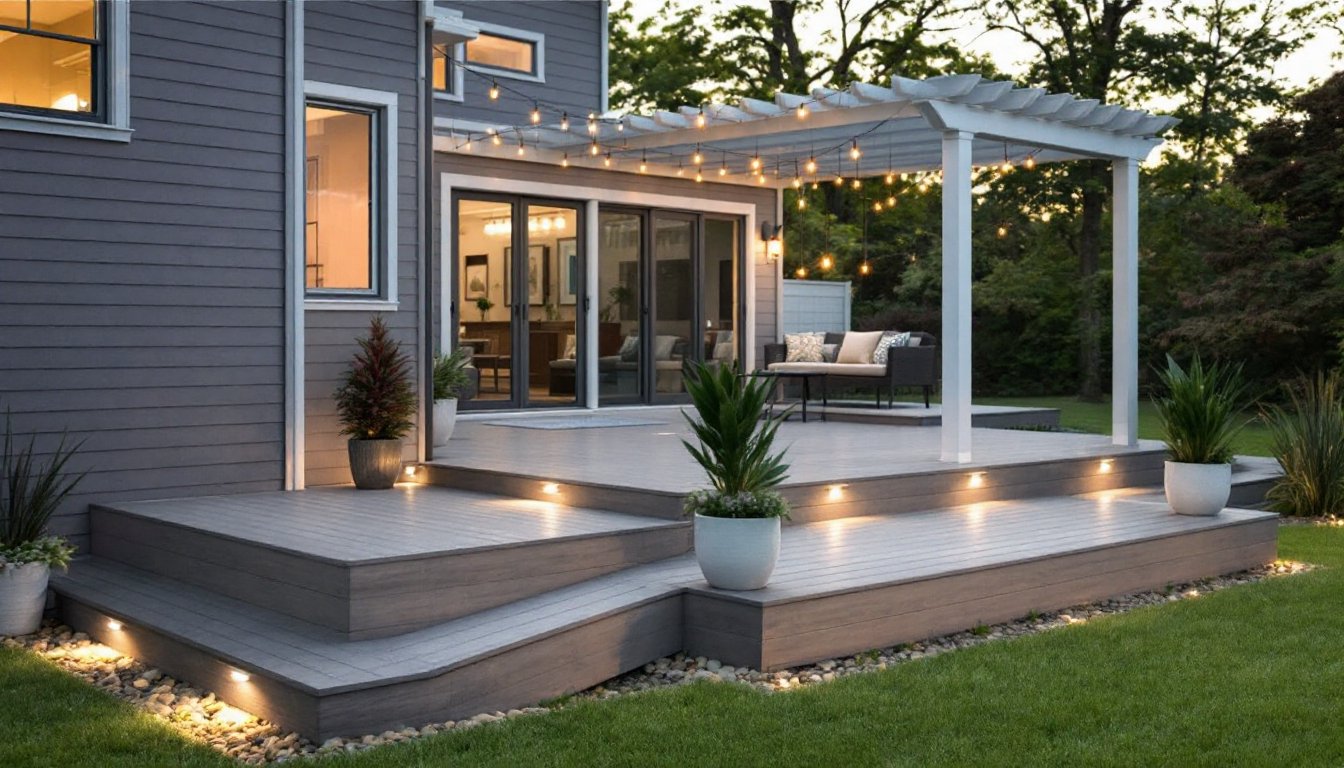
Multi-level decks create visual interest and zone your outdoor space without walls. A lower landing near the patio door, a step up to the main entertaining area, and perhaps a raised platform for a hot tub or seating nook feels more intentional and premium than a single flat platform.
Before you start, confirm your property’s grading and frost line depth (typically 12–48 inches depending on your region). Posts must extend below the frost line to prevent heaving in winter, this isn’t optional. Also check local codes: some jurisdictions require permits for any deck over a certain height or with stairs, and railings must meet IRC Section R312 height and spacing requirements (typically 36–42 inches high with no opening larger than 4 inches).
Using TimberTech boards on a multi-level deck showcases the material’s consistency. Each level can be the same color, tying the design together visually, or you could alternate between two complementary finishes to subtly delineate zones. Stairs connecting levels should be a standard rise (6.5–7.5 inches per step) and run (10–11 inches) for safe, comfortable navigation.
You’ll likely need a second pair of hands and a transit or laser level for this project. The framing complexity is significantly higher than a simple single-level deck, so factor in time and possibly professional help if this is your first major deck project.
Tropical Paradise Vibes: Creating Resort-Style Retreats at Home
Warm, rich tones and layered greenery transform a deck into an island escape. TimberTech’s tropical finishes, warm browns, honey tones, and even lighter cedar-like shades, set the foundational mood without the maintenance headaches of actual exotic wood.
Pair your composite decking with natural elements: large potted palms, bamboo screening, and integrated planters filled with ferns and flowering tropicals. The deck itself becomes a backdrop rather than the star: the planting strategy does the heavy lifting. Consider a pergola overhead (wood or aluminum) to dapple shade and create a sense of enclosure.
Add water features, a small fountain or recirculating waterfall, because sound enhances the resort atmosphere. String lights overhead (warm-toned Edison bulbs, not bright white LEDs) and a rattan seating area complete the vibe. Southern Living has published numerous tropical garden plans that pair beautifully with deck designs like this.
The advantage of using TimberTech rather than pressure-treated wood is that the consistent, finished appearance won’t fade unevenly or develop the weathered grey patina that reads rustic rather than tropical. You want that polished, maintained resort feeling, composite delivers it.
Coastal Cottage Decks with Weathered Finishes
Coastal style embraces a softer, lived-in aesthetic. Whitewashed railings, soft grey-blue deck boards, and weathered accents create that New England cottage charm. TimberTech’s lighter finishes, driftwood grey, whitewashed tones, and silver-grey options, give you authentic coastal color without the actual weathering that real wood requires (and the structural degradation that comes with salt spray).
Pair composite boards with white or soft-blue painted wood railings and trim. Incorporate rope details, coastal plant species (ornamental grasses, sea thrift, hydrangeas), and weathered metal accents like galvanized railings or coastal-style lighting fixtures.
One practical advantage: if you live near salt water, composite decking won’t degrade the way pressure-treated lumber does. Salt spray corrodes fasteners and breaks down wood fibers, shortening the deck’s usable life significantly. Composite materials are engineered to handle this environment far better. You’ll still need to rinse the deck after storms to remove salt residue, but the material itself remains intact.
Also, coastal municipalities often have stricter building codes around rot resistance and material durability, another reason composite works well here.
Built-In Features and Functional Spaces for Entertainment
A deck that works for entertaining needs more than open space. Integrated seating, storage benches, and defined zones transform it from a platform into an outdoor room. TimberTech composite works beautifully as the base for built-in elements because you can attach railing components, bench frames, and even planter boxes directly to the deck structure.
Consider a bench running along one edge (with storage underneath for cushions or pool toys), a small bar counter at one corner, and a designated grill area with surrounding counter space. Each element should be thoughtfully positioned: the grill shouldn’t smoke directly onto seating, and the bar should face the entertaining area, not the house.
Framing for built-ins follows standard deck construction, pressure-treated lumber for the structural frame, then TimberTech composite boards over the top. Keep all fasteners stainless steel or hot-dipped galvanized to prevent rust staining on the composite surface.
Lighting and Landscaping to Enhance Your TimberTech Deck
Lighting transforms a daytime deck into an evening destination. Recessed LED lights in the deck boards themselves create clean sightlines and gentle ambient light. Post cap lights or rail-mounted fixtures add visual interest and functional illumination for stairs and walking paths. Fix This Build That including built-in benches and privacy screens that integrate seamlessly with composite decking.
Landscaping around the deck’s perimeter softens hard edges and creates an intentional transition to your yard. Tall plantings (grasses, shrubs, or small trees) behind the deck provide a backdrop, while ground-level plantings echo the landscape beyond. Don’t crowd the deck itself, leave clear sight lines so the space feels open and uncluttered. The Spruce provides comprehensive guides on landscape design that pair perfectly with deck planning.
For lighting installation, run low-voltage LED systems (typically 12V) rather than line voltage, they’re safer for DIY installation and use minimal energy. Check your local code: some jurisdictions require licensed electricians for any hardwired outdoor lighting, even low-voltage systems.